
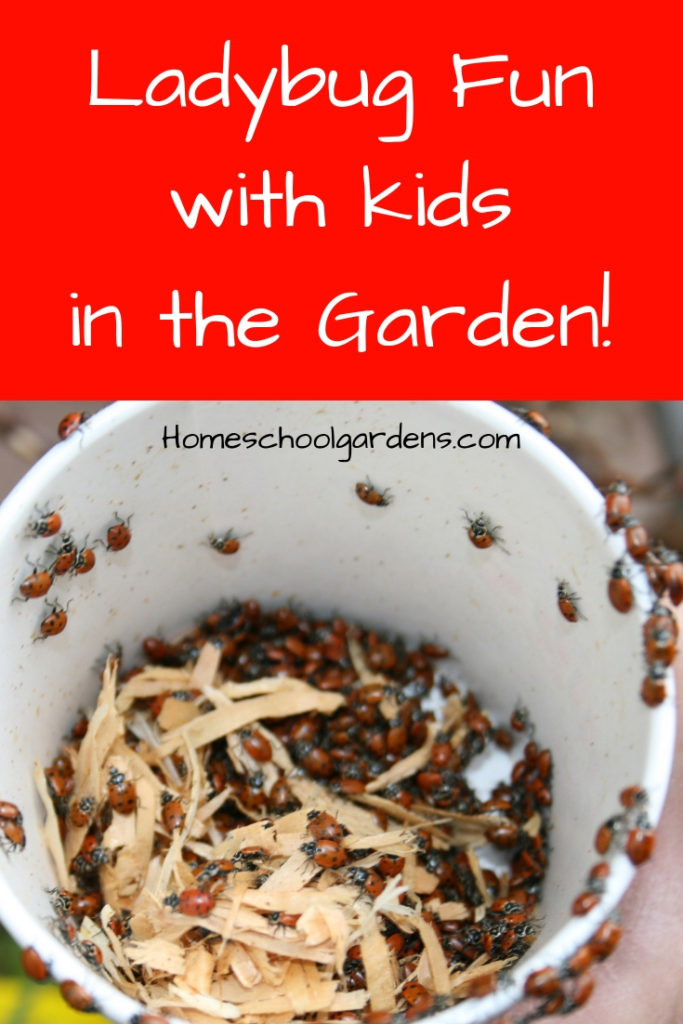
Ladybugs are incredibly popular this time of year and for good reason! Not only are they adorable insects for kids to learn about but they are also one of the best bugs to have in your garden. Every year we buy a cup of ladybugs from a local garden center to release in our garden while we read about them. It can be a bit tricky to get them to stay in your yard, but here are a few tips that you’ll want to try and some fun activities for your kids .
Spring Time Garden Bugs
You can tell it’s ladybug time when you start to see aphids on your plants…particularly roses if you have them. Aphids love roses but they can appear on pretty much any garden plants. Aphids are tiny soft bodied insects that suck plant juices which weakens plants. They also spread diseases and leave a sticky substance on the plants called honeydew. Ants feed on this honeydew and protect the aphids, so you’ll often find them hanging out together. Aphids reproduce incredibly fast, so it’s important to get a handle on them quickly.
My favorite way to handle aphids is to simply hose them off the plants with a strong spray of water. Do this every 2-3 days and you’ll knock back the population quickly. However, that’s not nearly as fun as releasing ladybugs.
Ladybugs are notorious for flying off before they finish cleaning up your yard of aphids. They won’t stick around in your yard if they don’t have a food source, so you’ll need to let the aphid population grow a bit. You won’t have to wait too long, but don’t release them as soon as you see just a few aphids. Wait a few days. Here are some more tips to get the ladybugs to hang around for a while.
Related Post – Gardening Books for Kids
How to Get Ladybugs to Stay
- They need a food source – aphids.
- Mist the plants with water.
- Release them in the evening after sunset.
- Sprinkle them at the base of the plants all around the garden.
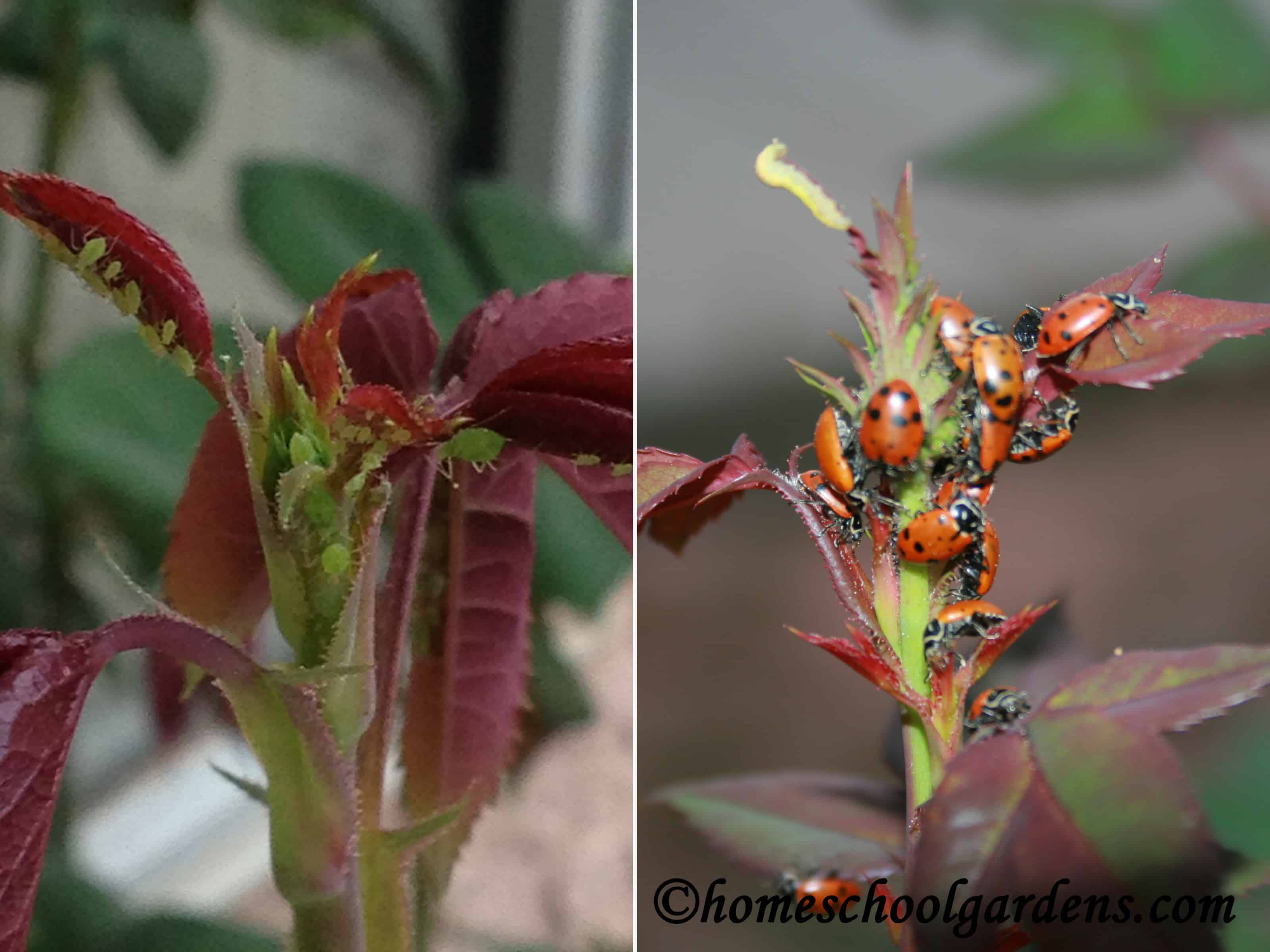
Aphids and then ladybugs on roses
Get Kids Involved
Releasing ladybugs isn’t just a pest control strategy for your garden. It’s also a fun activity that kids really enjoy. It’s one of our annual traditions that we do to welcome spring! Here are some tips to get kids involved in the garden with ladybugs.
Aphid Hunt
A few days before you plan to get ladybugs, have the kids head out into the yard and find plants with aphids. If they find a flower bud or leaf with aphids, have them try to count the aphids and note any other bugs that they find. Tie a string around the bud or leaf to identify it and come back every day to see if there are more aphids. Have them make a chart or graph with their tallies. Use a bug viewing jar with magnifying glass top to collect a few.
Observe Up-Close
Turn them loose in the garden with some magnifying glasses for an up-close look at the aphids. Have them make notes or draw pictures of what they see.
- What color are they?
- Do they have wings?
- What plants are they on?
- How many legs do they have?
- Do they see any ants?
- How are the ants and aphids interacting?
Hints… Aphids come in several colors. Some have wings and some do not. Ants often protect the aphids and can be found carrying them around the plants.
Prepare the Garden
Mist the garden with water right before releasing the ladybugs. Invite the kids into the garden with their magnifying glasses to look at the water droplets on the plants.
Release the Ladybugs!
Let some of them crawl on you and the kids. Some younger kids can sometimes be frightened of ladybugs even though others think they’re cute. Some kids love seeing a few crawl up their arms! Just make sure to check everyone before heading back into the house.
Inspect the Results
Head back out to the garden the next morning to check on your new pest control army. Have the kids go back to the flower buds and leaves that they tied string to for the aphid counts. Now, how many aphids do they see? How many ladybugs? Can they find a ladybug eating an aphid? Are there ladybugs in areas without aphids? Do this for a few days and at different times of the day. They can add this data to their charts or create a new one. Don’t forget the magnifying glasses!
Nature Journals
Have your kids draw what they find throughout the process in their nature journals. If they don’t have nature journals, regular paper and art supplies will work just fine. Have them write about what they observe. For younger kids, they can tell you their story and you can write it down for them. They often can’t write fast enough to keep up with the narrative in their mind. It’s perfectly fine to do the writing for them.
Related Post – Gardening with Kids – Child Led Activities
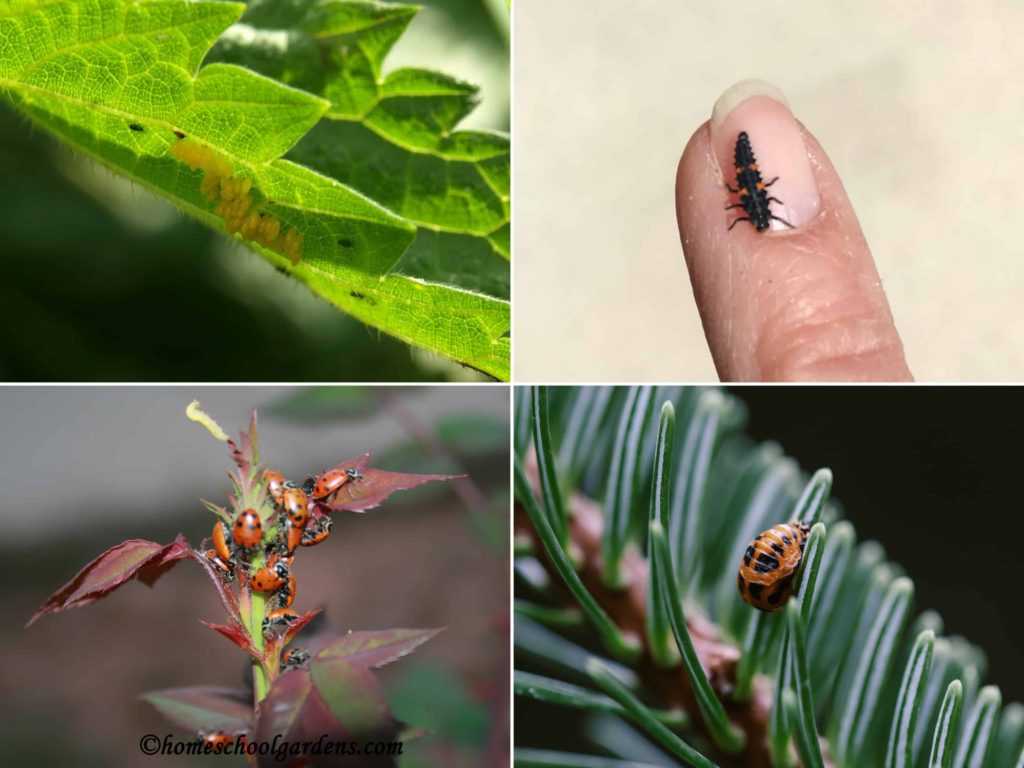
Ladybug life cycle – from top left going clockwise: eggs, larva, pupa, adult
Ladybug Life Cycle
Even when you follow all the tricks to getting ladybugs to stay in your yard, they may just fly away…even if you still have aphids. The goal is to get them to stay around long enough to start the next stage of their life cycle in your garden. The next generation of ladybugs will have a better chance of staying.
It’s important to be able to identify the different stages of their life cycle because one stage in particular can be a bit creepy looking. You don’t want to mistake the ladybug larva for a bad bug. The larva stage actually eats more aphids than the adult stage! (see above pic) Keep a look out in your garden for these stages. How many can your kids find?
Related Post – Morning Basket Book List with Life Cycle Books
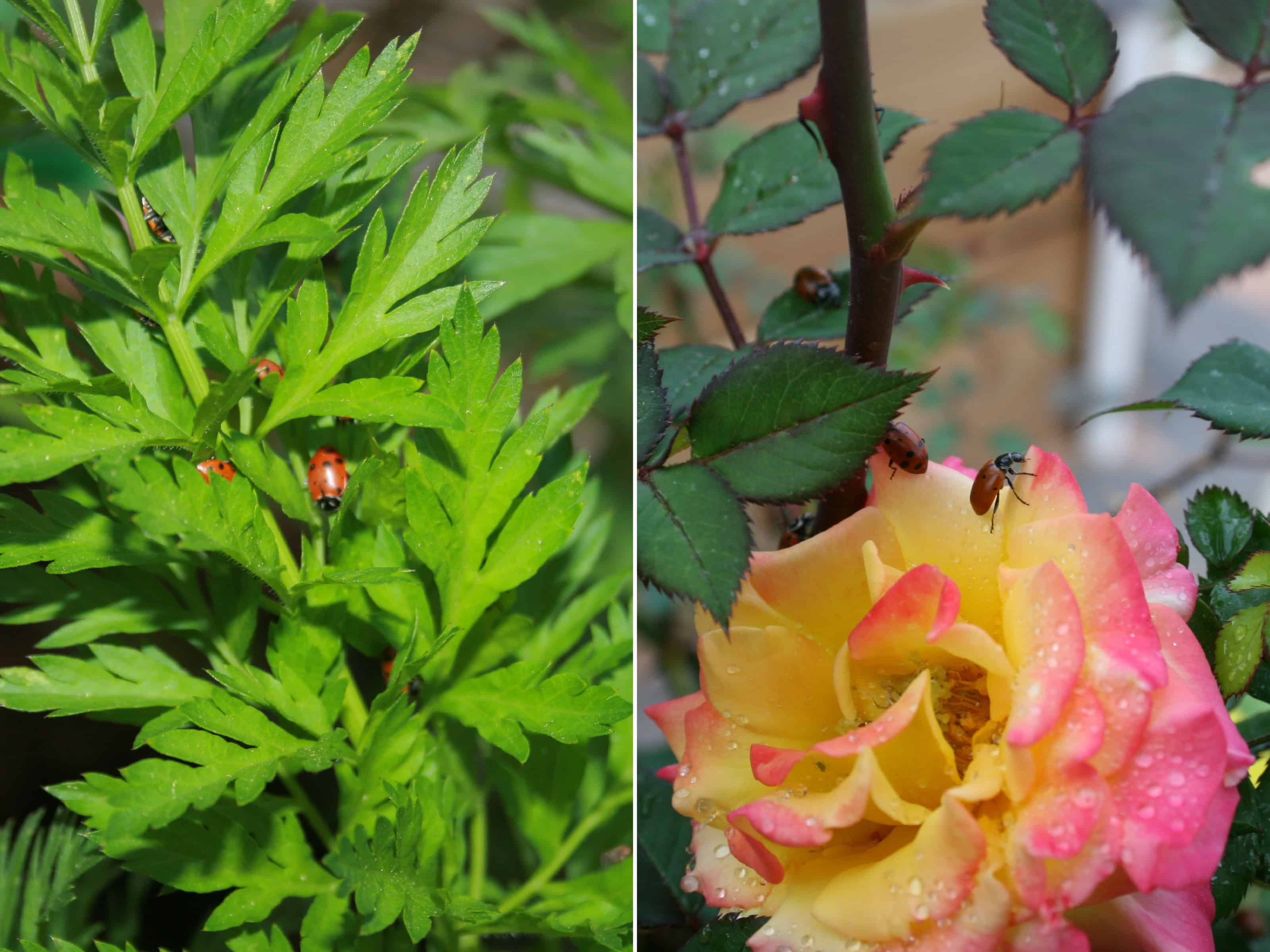
ladybugs in carrots and on a rose
Hatching Ladybugs
Yes, you can get your own ladybug farm and watch the life cycle up close! We hatch butterflies or ladybugs every year and have had great success with Insect Lore’s kits. We even hatched praying mantis eggs one year. That was a lot of fun but the gardener in me cringes at doing it too often. Praying mantises are often considered a beneficial insect because they help control the bad bugs but, they actually eat ALL bugs…even the cute ladybugs and butterflies. I try to steer my kids towards hatching ladybugs and butterflies instead, but it is fun to do once in a while.
Related Post – Hornworm Experiment – Great for Kids!
Some memorable quotes from my kids –
“Hey aphids! Someone is going to EAT you tonight!”
“Look, one of the ladybugs is on the back of another ladybug! It’s a buggie-back ride!”

Buggie-Back rides!
Looking for more nature fun with kids?
More Kids in Nature Articles
Hornworm Experiment – Great for Kids!
How to do Nature Study in a City
Gardening with Kids – Child Led Activities
Morning Basket Book List with Life Cycle Books
[…] Release ladybugs. […]