
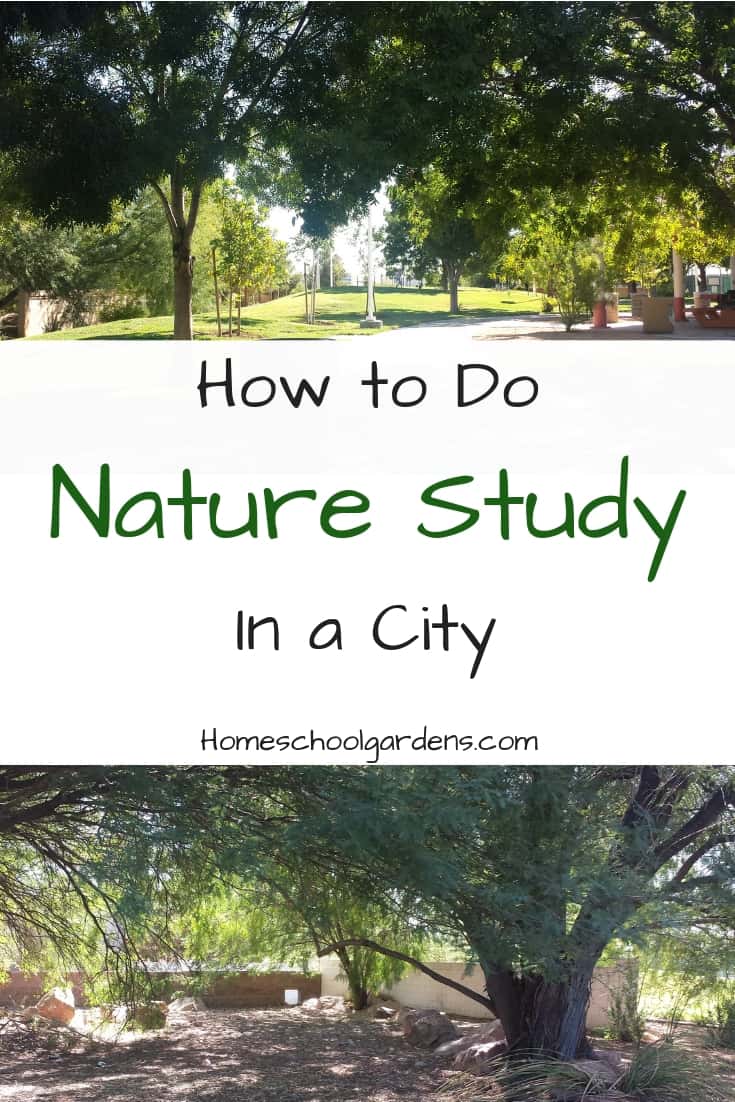
Nature study is an important part of the homeschool culture for many families. However, living in an urban area can make exploring nature difficult especially with young kids. We live in a city that is very transient. Everyone seems to be from somewhere else…and that’s not even including the military families that are stationed here. The desert southwest can be a bit different from many parts of the country, especially in the fall. Palm and pine trees rule here so we have to look hard for traditional fall activities like leaf piles. I often hear complaints about how hard it is to find nature in a city especially enough of it to have it be meaningful for homeschool families trying to incorporate nature study into their routine. Here are my top tips on how to find nature in a city.
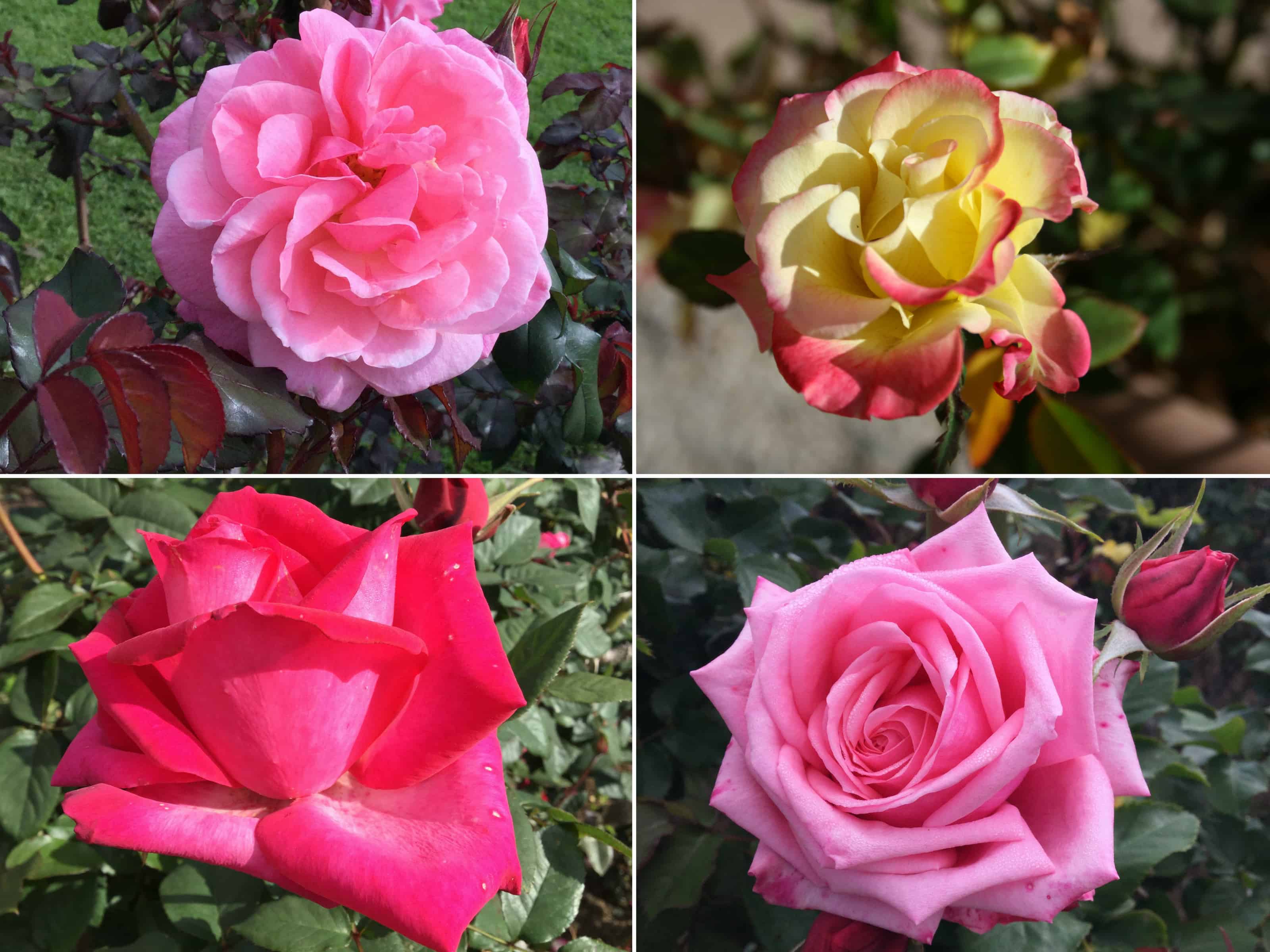
Roses we’ve found around our neighborhood.
Neighborhood Walk
A neighborhood walk is often the most convenient way to spot nature…even if you have to really look for it. Suburban families will have an advantage but there still are many nature experiences to discover in an urban area. Instead of focusing about what you don’t have around you, look for things that you CAN appreciate.
Urban areas are the best for finding “what not to do” in terms of landscaping and marveling about how a plant can survive such harsh and unnatural conditions. Have you ever seen a tree growing out of a gutter? A dandelion in a sidewalk crack with no sign of soil nearby? Even just observing pigeons can be entertaining. Of course, other birds are great to find but I don’t think there’s any city with a shortage of pigeons!
Try to find some secret undeveloped hideaway that is a bit overgrown with weeds and shrubs.
Look around at the neighboring houses and find those with interesting plants. Introduce yourselves and ask if you and the kids can take a few minutes to use your senses to gently explore their yard. Even if it’s only a few plants, the kids will still have plenty to observe. The picture above has some roses we’ve found in our neighborhood.
Take a few moments and follow your kids’ lead if they find nature to explore when you’re out on errands. They’ll find the lone tree, small patch of grass, or a butterfly in areas where you only see concrete. Don’t hurry them along to finish your task. Take a breath and let them explore for a moment.
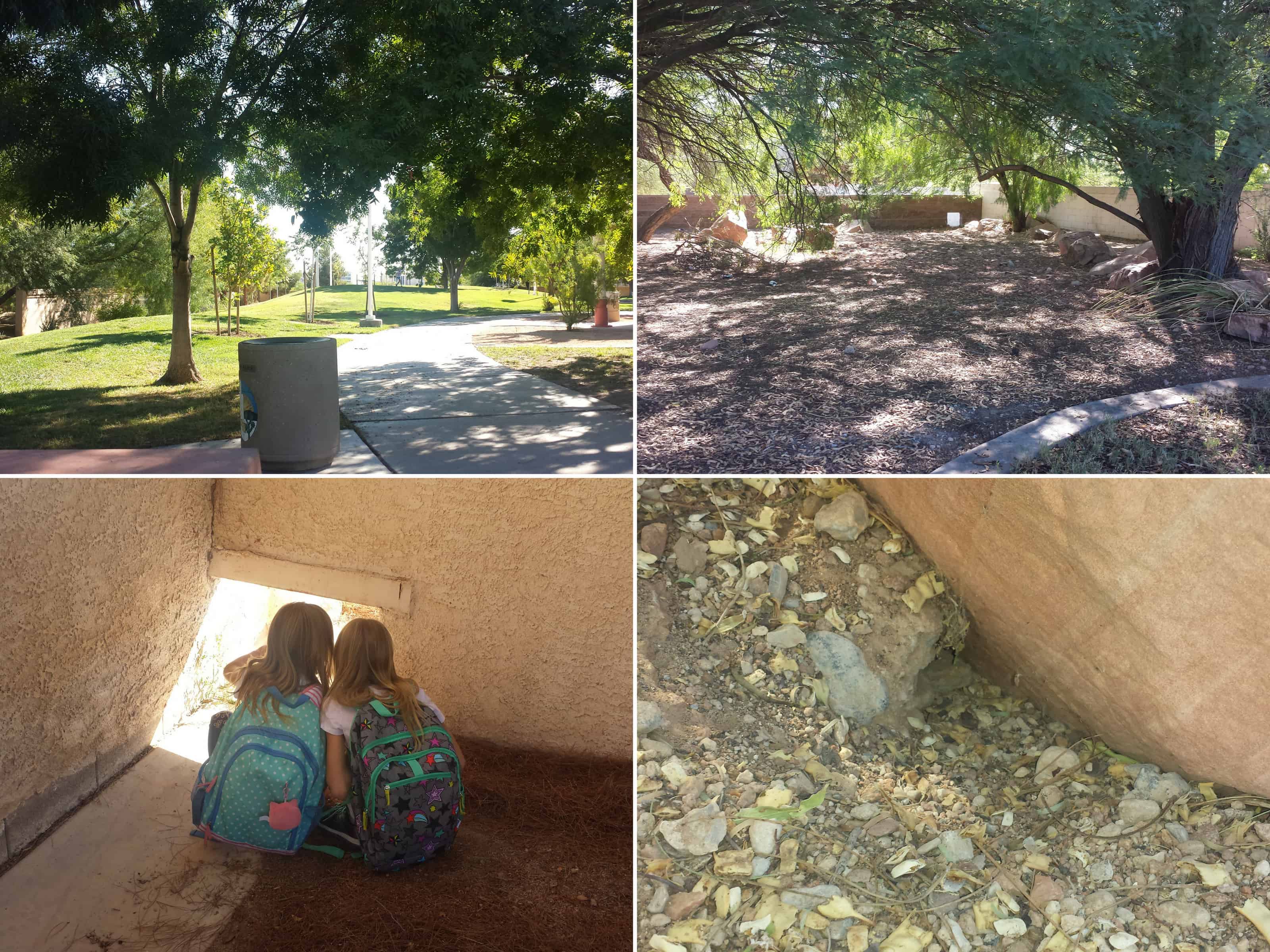
Nature in City Park – Clockwise from top left – 1) trees to climb, 2) seed pods to collect and more trees to climb, 3) examining a spider web, 4) saw chipmunks jump into their burrow.
Parks
Find a park that is close to where you live so that it’s easy to go regularly. These are good for weekly outings and can be kept short if time is an issue. Try for 30 minutes of exploring. If you can’t make it weekly, do what you can. Regular visits to the same place will allow you to see how nature changes with the seasons.
Choose something with trails. Bring sketch pads for everyone and hit the trails before heading to the playground. Try to find an area without many people. Quiet areas will have more animal and insect action to watch.
The trails might not be that impressive since they’ll probably be well groomed in a city park but you’ll still be able to spot insects, small animals (like squirrels), birds, grass (and hopefully weeds), trees, shrubs, and flowers. Weeds in a grassy area is a sign that the park isn’t sprayed with an herbicide…or at least not sprayed that often.
Bring local plant and animal identification guides although finding names isn’t necessary. The first priority is to observe the sights, sounds, smells and textures without making it too academic especially for younger kids.
Find a few trees and watch them throughout an entire year. Note how they change (or not) throughout the seasons.
How do the animals, insects, and plants change throughout the year?
What colors you see? What textures do you feel? Smells? Sounds? How do these change throughout the year?
Bring a notebook so you can jot down your kids’ thoughts and insights. Older kids can write out a few thoughts themselves but don’t let the writing get in the way of the experience. A yearlong journal is fantastic but don’t make it an assignment the kids dread.
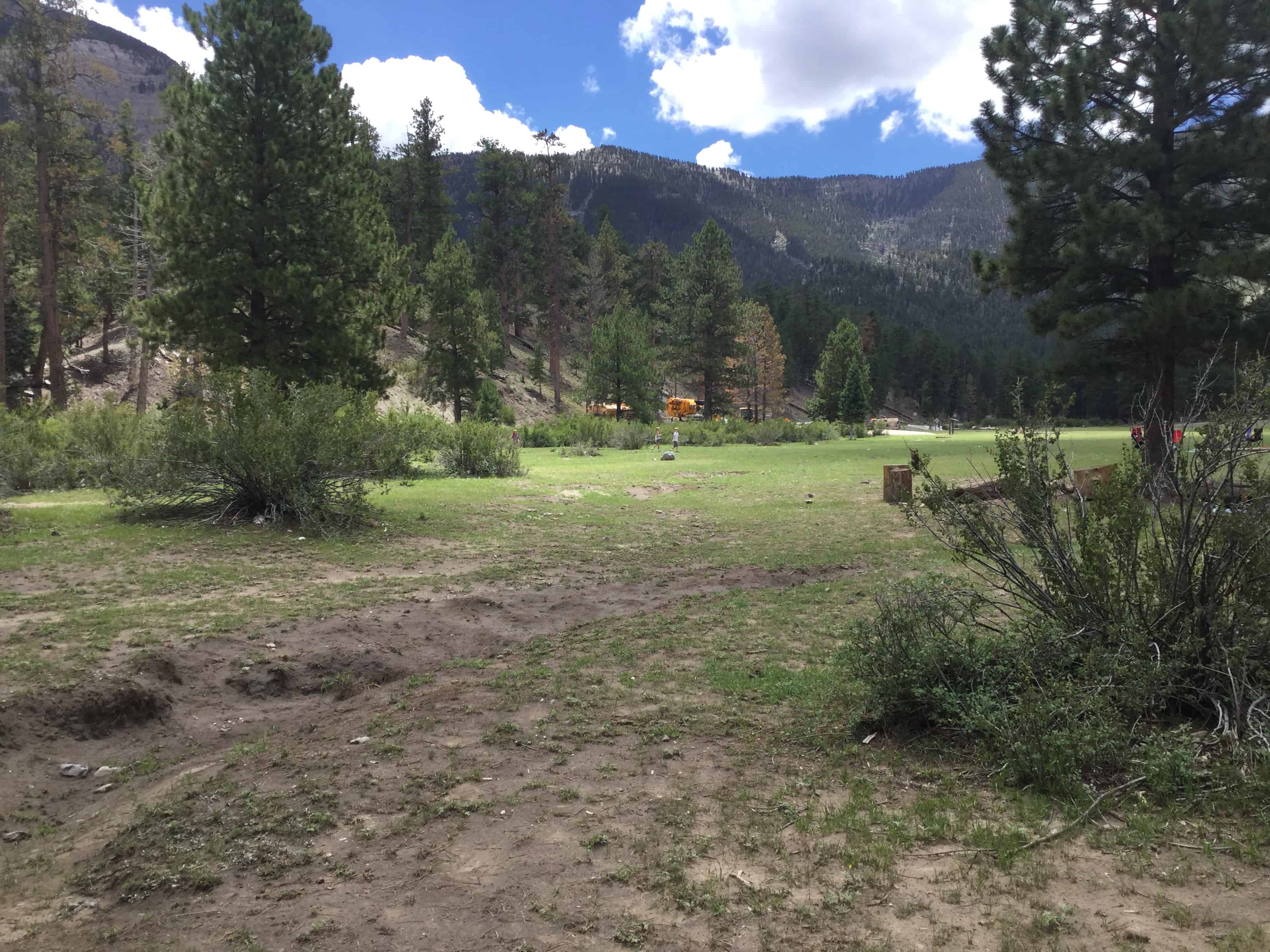
Mount Charleston, Nevada – one of our favorite nature hang outs
State and National Parks
Find your closest State or National Park or other preserved/protected area. If it’s within a 2 hour drive or so, this can be a semi-regular hang out. Try to go once every month or two. Make a day of it or at least plan to spend several hours there to make it worth the drive. Homeschoolers have the freedom to avoid the crowds by going on a weekday morning but it can also be a weekend adventure with the whole family.
Spend some time on the park’s website or call ahead to find trails or areas that are suitable for your kids’ abilities. Find the closest bathrooms for the areas you’ll be exploring…especially important for younger kids.
Bring good directions because cell phone coverage can often be lacking in these areas. However, don’t let that scare you. Just remember that it wasn’t that long ago that none of us had cell coverage!
Bring plenty of water and make sure the kids (and you) actually drink it. And don’t forget a first aid kit.
Pack more food than you think you’ll need. It’s better to have too much than to not bring enough and have to cut the day short because the kids are starving and cranky. Leave what you can in the car and just bring some easy snacks in you backpack like nuts and granola bars. You can always head back to the car to grab lunch especially if you have little kids that won’t make it very far down the trail.
I usually don’t bring sketch pads on a hike because backpacks can easily get too heavy for little kids to carry and then you’ll end up carrying everything. These trips are more about exploring and less about drawing. Drawing can be done back home while looking at photographs you take.
Identification guides are handy and easy to pack if you want to look up the names of anything you see.
Explore quietly…I know it’s easier said than done with little kids! You’ll see far less animal and insect action if the kids are yelling and running all over the place. Of course, that kind of fun is inevitable when out in nature but do try to have some quiet and calm exploration time too. This is the reason I like going on these outings with only one or two other families. A large group of kids can quickly make the creatures run and hide!
Related post – Hiking with Kids – What to Pack

Earthboxes are great for gardening on a patio or balcony.
Plant It
The easiest way to bring nature into your homeschool routine is to simply create it in your immediate environment. In urban areas, this is especially important. We can’t just take a quick walk out our backdoor or ride out to the edge of town to go walking through a field or forest.
Plant a garden. It doesn’t have to be elaborate. Many edible and floral plants can be grown in containers if all you have is a balcony or patio. You can fit quite a bit in an Earthbox. Start small but try to make room and time to create a garden area. It can expand with time. Even a small space will attract all kinds of creatures to observe in addition to the plants themselves. Keep an eye out for them and then sit back and watch them work.
Encourage the kids to be involved in creating the garden. Let them choose some plants and help take care of them. With kids helping, it’s not going to be a picture perfect garden. They’ll probably kill quite a few plants. That’s okay! It’s more important that they’re involved.
You don’t need to turn this into a botany lesson. The academics will follow naturally but in the beginning just let the kids use their senses to explore. Let their wonder and curiosity guide the “lesson”.
Relate post – How to Plant an Earthbox Garden Container
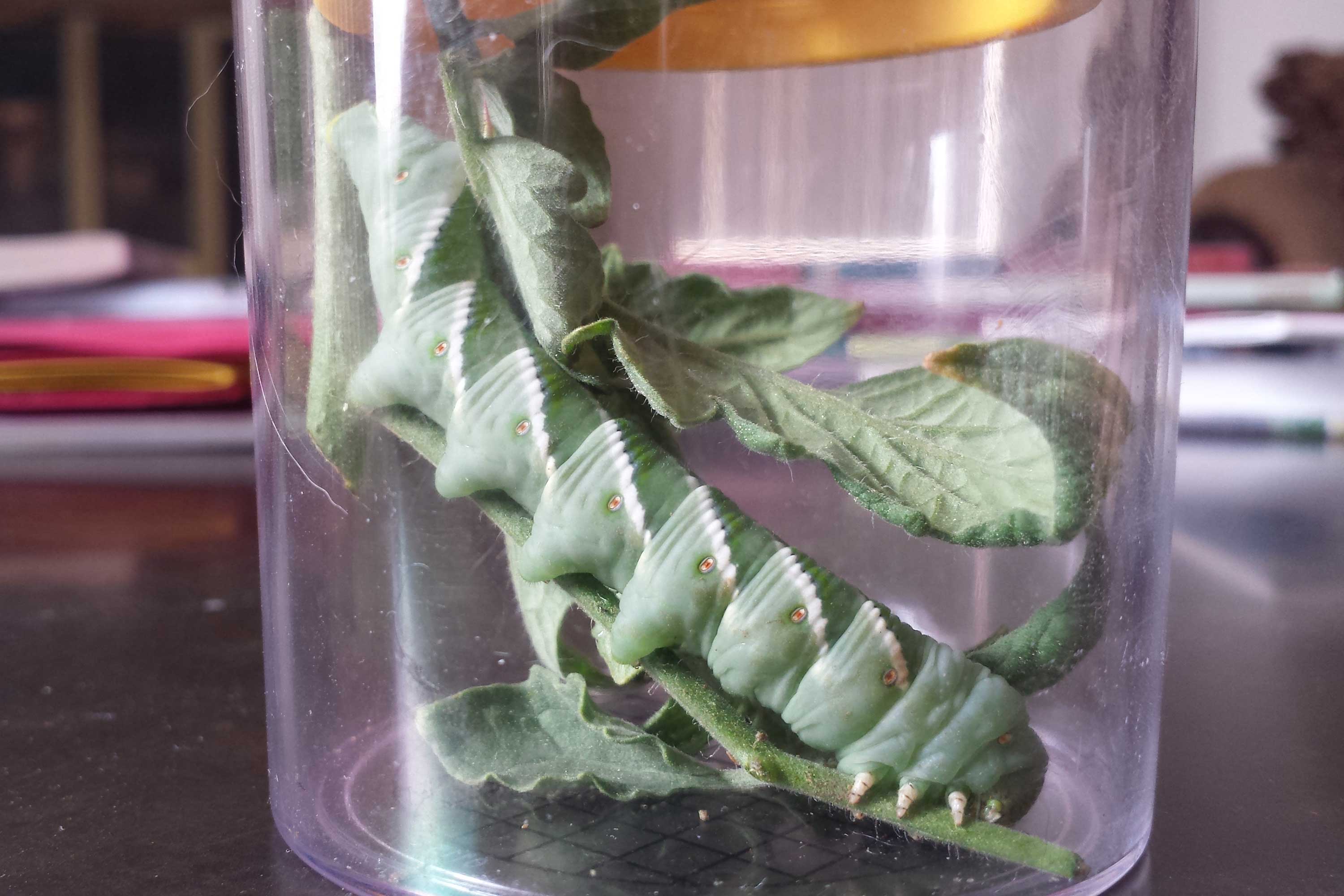
Tobacco Hornworm – Manduca sexta
Here’s an example of what can happen when you let kids be the guide. If you grow tomatoes, peppers or eggplants then chances are you’ll come across a few of these bad boys. “Hatching” hornworms is a summer and fall tradition in our family. Bug catchers with a magnifying glass built in is a must for kids exploring nature.
Related Posts – Hornworm Activity for Kids
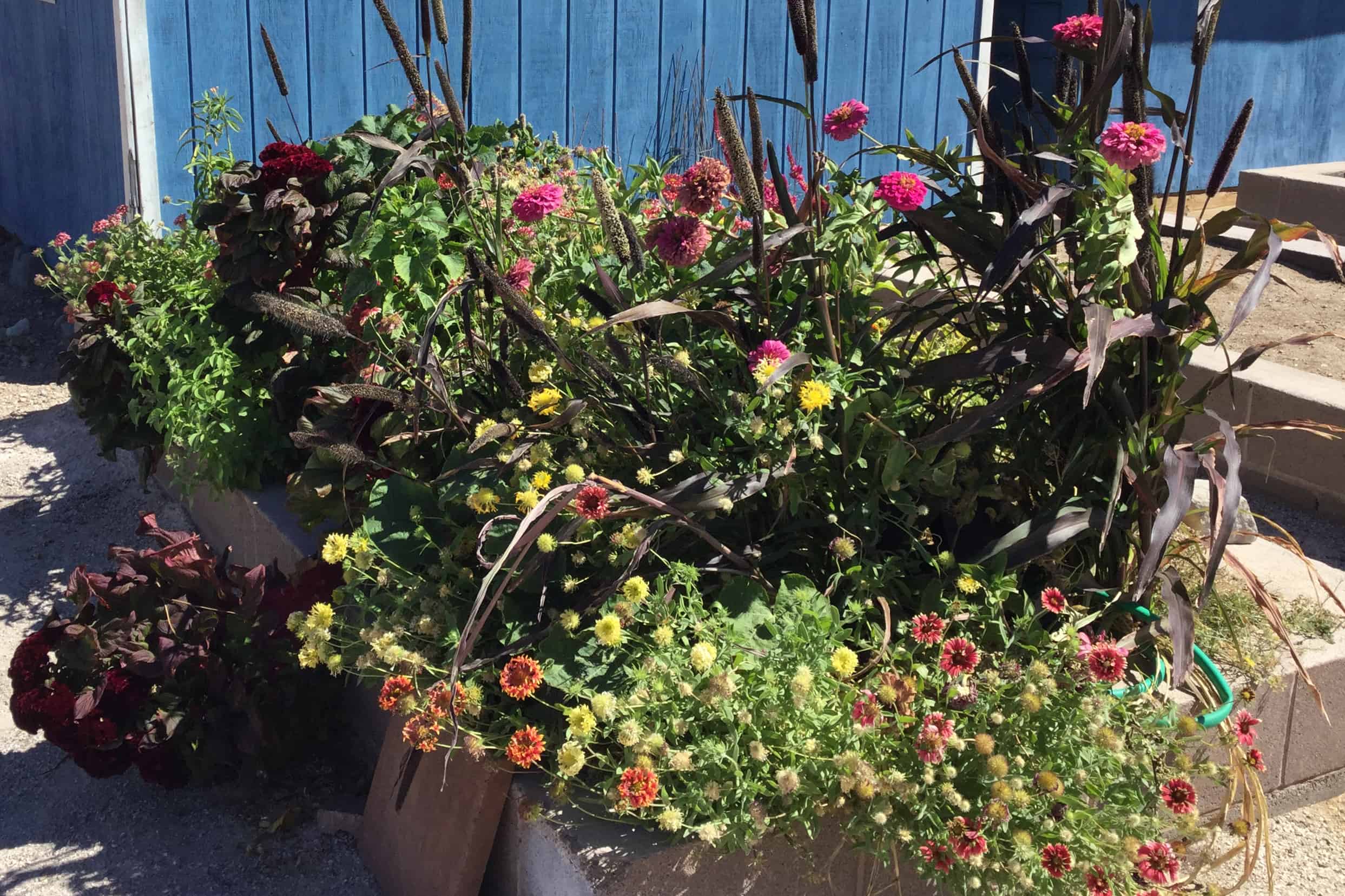
Flower bed at our community garden
Community Gardens
Many urban (and even suburban) homes don’t have much room for gardens beyond maybe a container or two on a balcony or patio. If that’s the case for you, try to find a community garden. They are becoming very popular so chances are there may be one near you. Check out American Community Gardening to find the closest one.
Even if you can’t care for your own bed at a community garden right now, many of them welcome visitors. Just be mindful of the gardens and make sure your kids don’t go digging in someone’s bed. There are usually many “community” plants throughout the gardens that people can touch and explore but have the kids explore the individual garden beds with only their eyes, ears and noses…unless of course a member of the garden says otherwise.
Related Post – Best Plants for Community Gardeners (or just busy gardeners).
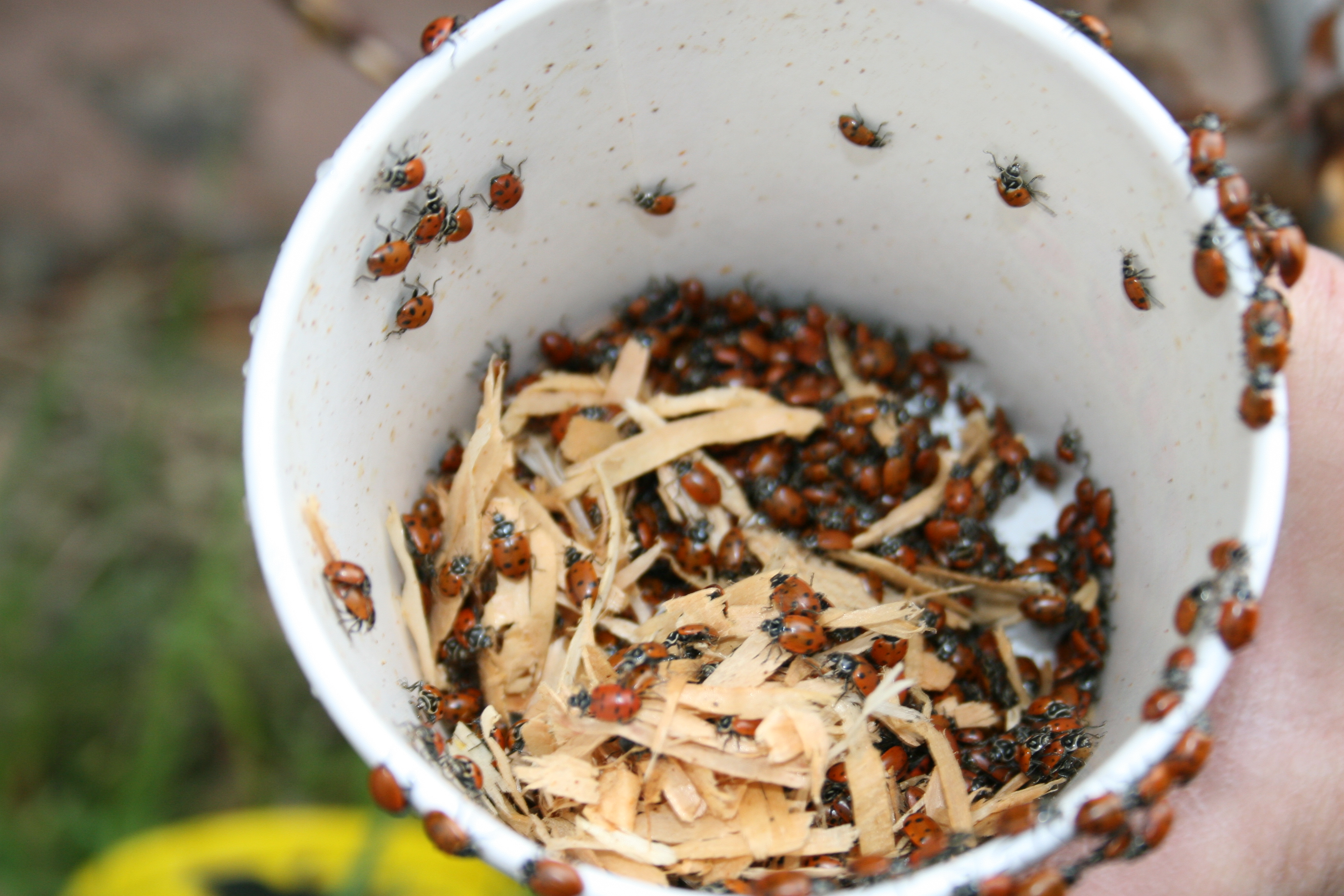
cup of ladybugs, about 1,500 of them
Buy It
Yes, you can buy nature. Each year we choose two insects to “hatch”. You can buy kits to raise them. We’ve done butterflies, praying mantises and ladybugs. I let the kids pick two to hatch each spring. During the first two years, I crammed all I could into the experience with extra books, crafts and lapbooks. You know…like a good homeschool mom does, right?
I’ve relaxed a lot over the years and now I prefer to add in only one or two fantastic books and some simple nature journal drawing. I follow my kids’ lead when trying to add in anything more than that. If you try to do everything, the kids will get so burned out and tired of the bug that they’ll lose interest by the time the insects actually hatch. That completely defeats the purpose of the experience! Let them explore and observe at their own pace.
You can also buy ladybugs and praying mantis egg cases at garden nurseries every spring. If you don’t have a garden, you can release the ladybugs at a local park. Have you ever seen a little kid pop open the lid on a jar with hundreds of ladybugs? It’s quite an exciting experience!
Related Posts – Butterfly Activities and Releasing Ladybugs

Nature collections – in their boxes and then spread out
Display Nature
I’m probably the only homeschool mom on social media who emphasizes nature but doesn’t have a picture perfect nature display table. I’m sure you’ve seen pictures of the beautiful tables that get changed out every month (or at least every season) along with a corresponding selection of beautiful books. Well…that is not real life in our house. Not even close.
My kids love to keep their own nature treasures in their own rooms…in a box…a plain cardboard box. I’ve tried making something more Instagram friendly but it just isn’t how my kids want to interact with the nature treasures they collect. What’s more important? A display that looks so perfect no one wants to touch it or a box that gets dumped out almost every week because that’s the only way to really see all that’s in it?
I’ll tell you…having a box with random nature items the kids have collected themselves is a fantastic way to have a sorting game all ready to go. My kids love to sort them by types (rock vs. shell vs. bone vs. seed), size, color, shape, texture, where it was found, who they were with when they found it. I’m not kidding…my kids can tell you where they got everything in their boxes and who was there that day. They’ve had some of the items for years. I think they develop a deeper connection with the items in their nature boxes than they would if we had the same items rotate on a seasonal nature table. Having their own boxes in their own rooms gives them ownership of their collections. Maybe we can start a contest to see who has the messiest and most disorganized nature display?
Find Nature in a City
So there you have it…7 ways to find and enjoy nature while living in a city. Pick one and start there. Slowly add in more options and soon you’ll find that you’ve built yourself a nature study culture for your homeschool even though you may live in an ugly concrete filled city. There is natural beauty nearby. We just have a work a little harder to find it!
Related Posts
Hornworm Experiment – Great for Kids!
Easy Plants for Community Gardeners
[…] How to do Nature Study While Living in a City […]