
We have mild winters here in southern Nevada but it can get cold enough overnight that most of our vegetable plants need protection. Sometimes it can seem like a hassle, but the payoff is harvesting food all year. With a little planning, we can eat from our gardens all winter. Here is a look at what I use for frost protection in my garden to keep my plants producing. Gardeners in colder climates can also use these items to extend their growing season.

First, a look at what didn’t work…
Painter’s Plastic with a Hoop House
I have hoop houses made of PVC pipes over my raised beds. A 10’ PVC pipe is the perfect size for a 4’ wide bed. I draped and secured painter’s plastic over the hoops. I didn’t want to invest in actual greenhouse plastic at that time.Painter’s plastic is easy to find locally, but I was not impressed with it. It didn’t provide the frost protection I expected. I ended up adding incandescent Christmas lights and a frost blanket directly over the plants. I also used a work light that I hung from one of the hoops. It seemed like a lot of work for very little benefit, although it did do the job of protecting my garden from frost.
Theory About Painter’s Plastic
A garden friend shared with me her theory about small hoop houses. She’s known several other gardeners who have done the same as I did with similar disappointing results. Her theory is that plastic (even the good greenhouse plastic) used on small hoop houses actually makes the interior colder. It has the opposite effect! I’d love to look more into this theory since there is so much information online about using plastic on hoop houses in small residential gardens. But for now, I’m taking my friend’s theory and running with it. My one year of using painter’s plastic was enough to make me toss the idea.
Frost Protection in My Garden that Actually Works!

Jobe’s Frost Blanket
Frost Blankets
After much trial and error, I found a frost blanket that actually provides good frost protection for my garden. The one that supplied the best protection was Jobe’s Frost Blanket. It was also the only one with a label that stated how many degrees of protection it offers. This is an important bit of information that I was surprised to find lacking on other brands. One of the brands that I tried made no difference at all!
Frost protection blankets come in many different thicknesses for different amounts of protection. For our area, the Jobe’s Frost Blanket that I’ve found at our local Lowe’s and Home Depot has 6-8 degrees of protection. Other areas should carry what is needed locally and, of course, there are also many options online. My one critique of Jobe’s is that, according to the label, it shouldn’t be left on for more than 48 hours. This is a problem if you’re heading out of town.

Burlap hanging over trellis on Earthbox. I hang one on each side and secure them together.
Burlap
Burlap is my answer to that problem. In my research I haven’t found a limit for how long burlap can be left covering plants. One winter I left it on my vegetable garden for two weeks without any issues. However, burlap can be heavy. You need to prop it up above tender plants. Stakes and small tomato cages come in handy. I primarily use burlap around the trellises in my Earthboxes. I secure it to the trellis with clamps just in case the wind picks up over night. Even though the burlap can be left on for a long time, I still remove it most days. Burlap is also extremely durable. It will last the longest of any frost blanket I’ve found.

Other Blankets
Aside from store bought frost blankets and row covers, you can also use your old sheets and light blankets from around your house for frost protection in your garden. Since they’re not made specifically for the garden, take them off each day to allow the sun and air to better reach the plants.

Light row cover
Agribon Frost Covers and Floating Row Covers
Agribon is a widely popular frost blanket brand especially among serious growers. It took me a long time to try them because I couldn’t find them locally. I finally ordered two of their covers online and I’ve used them for three years now. I use the AG-30 for frost protection for my garden and the AG-19 as a row cover for areas that I’ve sown seed. They come in different thicknesses for different levels of protection. The thinnest one would be for pest control.
They can be left on for much longer than the other frost blankets I use because they let in more sunlight, air, and water. However, the more frost protection you need means the less of those elements it will let in. I still prefer to lift them off the plants when I can, but they’re designed to be left on longer. They can also be used to cover a hoop house.
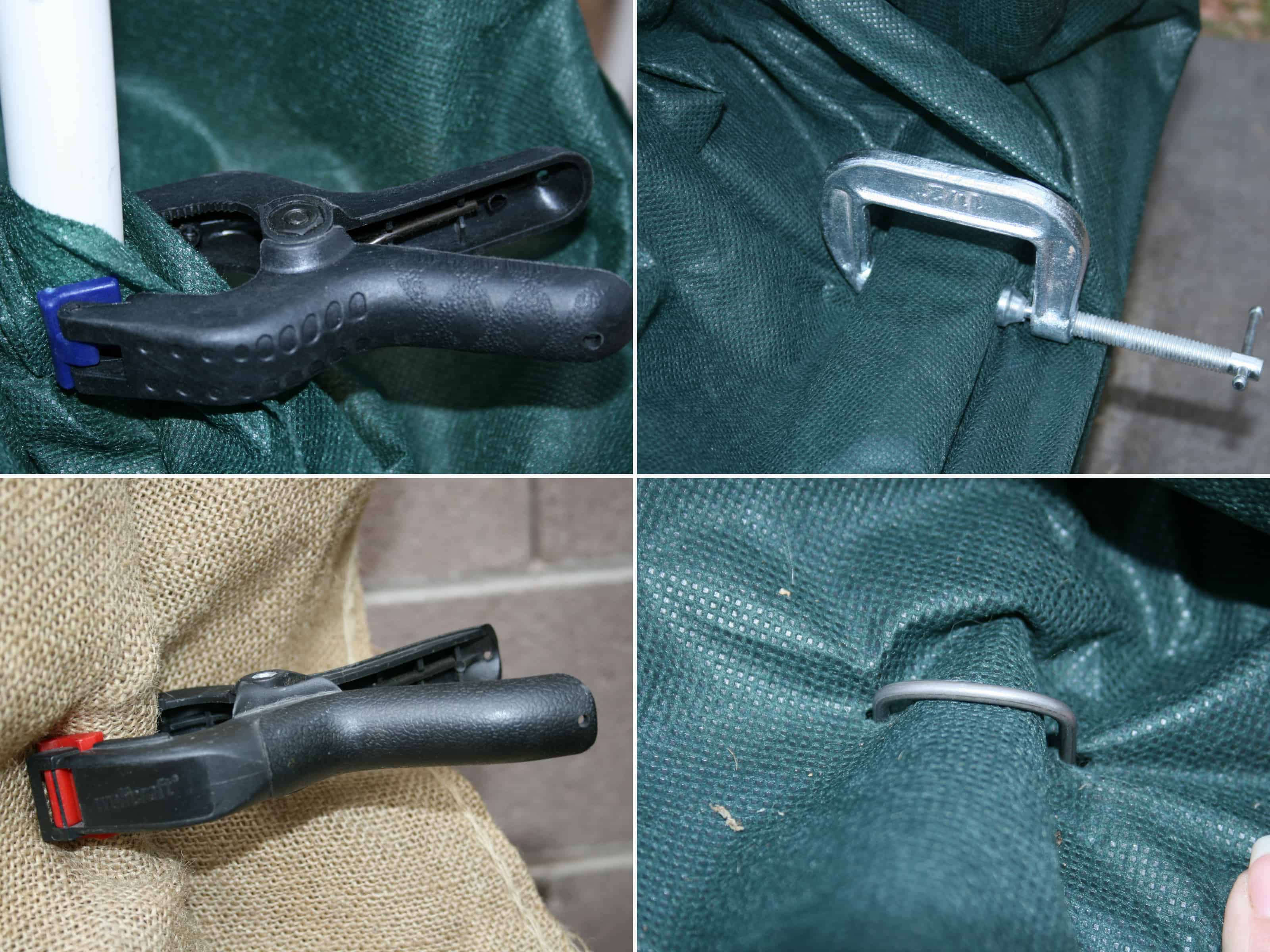
Clamps for Frost Blankets
Clamps for Frost Protection Blankets
You’ll need clamps to hold your frost blankets in place especially on windy nights. We have raised beds so I need clamps that can open wide enough to secure the blanket to the wood box. You can also use clothespins or small clamps and wrap the blanket around an area and secure the blanket to itself. One year I used garden staples to secure the blankets to the soil but those pins can rip the blanket easily. The staples come is real handy when securing drip irrigation but I’d try to use something else with the blankets if you can. With gentle handling, frost blankets can last for several years. You can also use rocks and bricks to keep them in place but take care not to snag and rip the blankets.
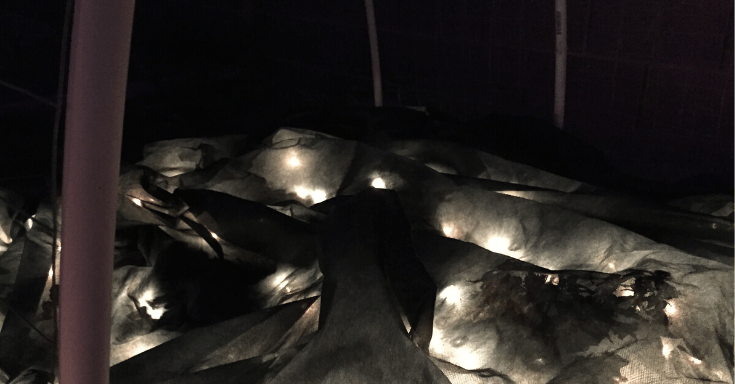
Christmas Lights and Work Lights
This is my favorite part of frost protection although I fear some of it may become extinct soon. You need the regular old fashioned Christmas lights. The newer LED ones do not emit heat so make sure you buy the right ones. Weave them around the plants on top of the mulch. You don’t have to worry about burning your plants. You’ll need to get them close to the plants since they don’t give off a ton of heat but another degree or three can make a big difference. A frost blanket helps keep that heat inside.
There are other types of outdoor lights that can be used especially if you need more heat, but for us in Southern Nevada these small incandescent Christmas lights work well…plus they’re fun decorations! You can also use an outdoor work light if you need a stronger heat source.
Stock up on the Christmas lights right after Christmas if you can. Locally I find the shorter strands of about 100 lights for $1 after Christmas and $5 before Christmas.
Mulch
It’s not just for frost protection but I thought I’d mention it anyway. Mulch helps regulate the soil temperature. Pile up the organic mulch around cold sensitive plants but keep it way from the stems.
Remote Sensor Thermometer
Using a thermometer is essential for trying out frost protection blankets. Several years of testing has shown me that a few of the frost covers for sale locally actually don’t provide the protection claimed. One didn’t provide any protection at all! I would have never figured that out without using a remote sensor thermometer. Using a thermometer has taught me a few things…
- Our backyard is consistently about 5-7 degrees colder than what is reported for my city. That is a big difference in terms of frost protection!
- Some frost blankets don’t have information on their labels about how much frost protection they provide.
- One of the frost blankets didn’t provide even the minimum amount of protection listed on the label.
Cold Frames
Cold frames are like mini-greenhouses that are put over the garden area. They usually have a hinged roof that allows easy access to the plants. These aren’t really necessary for our mild winters but they are definitely a handy tool to look into for those living in climates with harsher winters.
There are many options for protecting plants during the winter. Luckily, our winters are mild so we don’t have to dig too deep into our bag of tricks for our garden plants to not only survive but also thrive. With these frost protection tips for our gardens, those of us with mild winters can grow food all year round.
Related Posts
Grow Healthier Seedlings using Soil Blocks
Best Plants for Busy Gardeners
Get and Early Start on Tomato Season


Your Christmas light frost blanket picture is such a hoot! Very good idea.
“Decorating” the garden beds is definitely a lot of fun!
Thanks for the reminder, I need something to wrap the Bay Tree in this year before i leave the UK to warmer climates #mygloriousgardens
What an informative post, Terri! I love the burlap which is what I use on my tender plants but, as you say, it’s vwry heavy and they can get a bit squashed.
I tend not to grow tender plants as, in the U.K., we can get prolonged spells of frosts. I’d like a cold frame though as I think they are easy to use.
Thank you for linking to the #MyGloriousGardens link party. We hope to see you again. X
My husband bought be me a cold frame one year. It was very expensive for what it was and it was destroyed quickly by our wind and sun (even winter and early spring sun). I tried to build one last year but the thought of me handling power tools was enough to make him take over and build it for me! It’s too big for my gardens so I use for my seedlings and smaller container plants when it gets too cold for them. It works really well for us but I can imagine the U.K. gets pretty cold.
I had no idea that frost blankets were a thing! This makes sense for those living in colder climates who vegetable garden as much of the year as possible. Home Depot always has a great supply of gardening goodies! Thank you for joining the October #MyGloriousGardens link party!