
I love growing crops that continue to produce all season. These are perfect for urban and other backyard gardeners who don’t have a lot of space. During the cool season, my favorites are lettuces and other leafy greens such as spinach, kale and Swiss Chard. With a little planning and the right harvest technique these plants can keep going and going and going. Let’s look at how to extend your garden harvest for these crops.
For us in the southwest desert, these are cool season crops. We plant them in the early spring and late fall. With a little planning we can grow them from the fall, all through the winter, and into the spring. I look at this cycle as just one long cool season. If you’re not in a mild winter climate, check with a planting calendar suitable for your area to find the right time for you. However, you can still use these tips to extend your garden harvest but adjust the timing to fit your climate.
Plant Early in the Fall
Have your first round of transplants ready to be planted at the earliest possible planting time for your climate. Our local nurseries don’t always carry the transplants early in the planting season, so I have my own transplants that I’ve grown from seed. You can also direct sow seeds at this time. However, using transplants will make the best use of small spaces. This first planting may be quick to bolt (setting seed due to heat). Keep it well harvested to help prevent bolting. Plant them in an area that gets afternoon shade if possible. If you have a choice of varieties, choose ones that are “heat tolerant”.
Related Post – How to Start Seeds in Soil Blocks
Succession Planting
Direct sow or transplant new seedlings every 2-4 weeks. This can take a bit of planning if you’re growing your own transplants from seed. However, it’s well worth the effort to have a few new transplants ready to go every couple of weeks. As the fall season progresses, you won’t have to stick with heat tolerant varieties and you can plant in less shaded areas. Look for “frost hardy” varieties if needed in your climate.

Frost Protection
Know your average first frost date. You can find it here. Take inventory of your frost protection tools at least a month before that date. I love using frost blankets and Christmas lights. Check out my post about frost protection for all the details about what has worked for me AND what hasn’t worked. In mild winter climates, we can continue to grow all winter by using these frost protection tips. If you have a “true” winter (with snow and all that), you can still use frost protection to extend your harvest.
Related Post – Frost Protection for Gardens
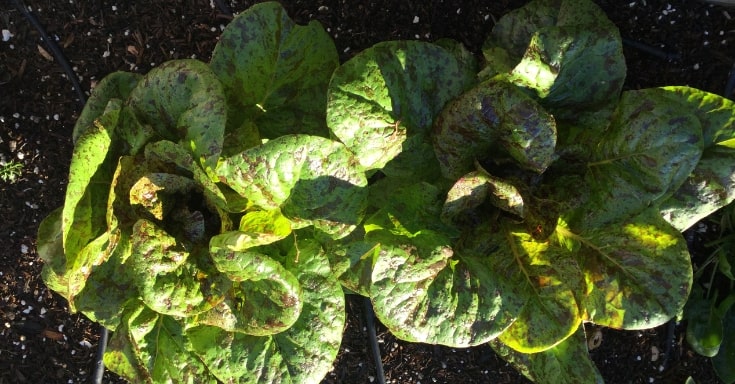
Freckles lettuce before harvest – romaine lettuce
Cut and Come Again Harvest
This is the harvest technique I use to extend the harvest window of leaf and romaine lettuce, spinach, kale and Swiss Chard. In the grocery stores, we often see these crops harvested whole as you would a carrot or other root vegetable. We can do things differently in our gardens. Cut and come again harvesting is exactly what it sounds like. Harvest just the outer leaves of the plant and leave at least 5 decently sized leaves (not tiny baby leaves). The inner leaves will continue to grow, and you’ll be able to harvest those in just a week or so. New leaves will continue growing from the inside. The cycle continues. You can keep harvesting until the plant bolts in warmer weather or is damaged by frost in colder weather.
Some crops may continue for a very long time (Swiss Chard can last for years in our climate) but other crops may get a bit bitter as the plant gets older. Different varieties work better in different climates. This is when succession planting becomes important. You’ll have fresh plants to replace older plants if needed. As the season progresses, use varieties labeled as “heat tolerant” or “frost hardy” to find plants that will do best in your climate.

Freckles lettuce after harvest – romaine lettuce
Winter Planting
Plant the last round of these crops at the end of the recommended planting window for your area. For us in the southwest desert, these crops will grow in what other climates consider winter even though our winter doesn’t usually involve snow. Plant these in an area with the most sun. Use a closer spacing because these plants will grow slower and stay smaller than the plants grown earlier in the season. I use my best frost protection to baby them along. Younger plants are more susceptible to frost damage. Even with our mild climate and the best frost protections, there is a window of time where planting is not recommended. Some times I follow the “rules” and other times I plant anyway.
Spring Planting
Fall to winter to spring is just one long cool season for me, so I just start the planting cycle again. I plant at the earliest part of the planting window for our climate. I still use frost hardy varieties in the early part of this season and transition to heat tolerant varieties when needed. My last planting for these cool season crops happens at the end of the planting window for my climate. These plants go into a deep shade area in my yard as a way of trying to delay bolting. Containers are useful for this because they can be moved as the season progresses and shade needs increase.
The big thing that changes for me when planning my early spring garden is that I start thinking about how to transition into my warm season garden. I get an early start on my tomatoes by planting them in February which means I need to leave space for them in my cool season plans even though we normally don’t think of tomatoes as cool season crops. My goal is to harvest tomatoes in early May so that I can get a good harvest before we hit triple digit temps.
Related Posts – Get an Early Start on Tomato Season
Cool season greens are fantastic crops for the urban or small space gardener because they can have a long life by following these tips to extend your garden harvest. Plant at the very beginning of the planting window for your climate. Use succession planting throughout the season. Choose varieties based on heat tolerance or frost hardy qualities. Use frost protection to extend your final planting in the fall or even to get an early start on spring planting. Use the cut and come again harvest technique to get the most out of each plant.
What are your favorite ways to extend garden harvest windows?
Related Posts
How to Start Seeds in Soil Blocks
[…] Extend Your Garden Harvest […]