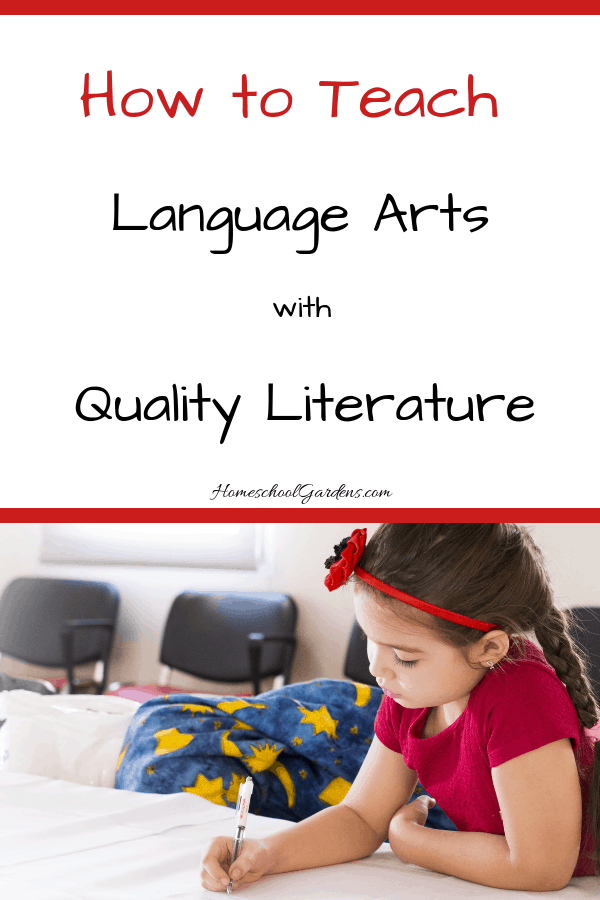
Language arts can be a tricky subject for many new homeschool families. Quite a few topics fit under this title, and it can all get a bit confusing. Once I realized everything language arts entails, I thought it’d take up most of our homeschool day. The list is long! Thankfully, I was soon introduced to the idea of using copywork and dictation. Once I wrapped my head around it, it brought clarity to many aspects of language arts. Here’s how we use copywork in our homeschool as a language arts tool.
What is Copywork?
Copywork is the practice of copying passages from quality literature. It can be only one sentence for young students or much longer for older students. The goal is to produce a perfect copy of the passage in excellent handwriting. Speed is not important if the quality of work suffers. Through using copywork passages from quality children’s literature, children learn grammar, punctuation, spelling, and literary style elements.
Later in the week (after the passage has been copied and studied), move onto dictation. Have the child write the passage from memory as you read it aloud. For younger students, you can read it in sections of 2 or 3 words at a time. Older students can work their way up to writing out a sentence or more at a time. Try to read the sections of the passage only once to encourage your child to keep the section in their mind as they write. Start slow, especially with younger students, and have them gradually work up to writing out longer sections of the passage.
Once the dictation is complete, I give my kids time to reread through the passage they wrote to double check for errors. If they don’t catch every error, I give them a hint such as telling them how many misspelled words they need to find. This encourages them to correct their own mistakes.
Need a little hand holding with using copywork in your homeschool?
I was first introduced to copywork and dictation through Julie Bogart from Brave Writer. It actually took me quite some time to jump in because her programs are so different than what I had been using. I had a hard time wrapping my head around it. While you don’t necessarily need a structured program to implement these elements, it certainly helped me navigate this new idea. We started with the Quiver of Arrows and are now doing the regular Arrows and even a few Boomerangs. These teach the mechanics of writing through copywork and dictation.
These aren’t just disjointed passages in workbook form like many language arts programs. The copywork passages are taken from quality children’s literature. Each book has it’s own study guide (Arrow or Boomerang) which contains 4 weeks of copywork passages plus ideas for writing exercises to explore literary elements. Read the book aloud to your kids throughout the month, and use the Arrow to teach language arts through great books that you’ll want to share with your kids anyway.

Copywork in Homeschool with Younger Kids
I decided to start with my oldest with the Quiver of Arrows product which is geared towards 1st and 2nd graders. It was the perfect level for my her 2nd grade year. In the beginning of the year, she only copied a few words at a time. Gradually, her stamina built up over the year. She worked on the passage for a few minutes each day while paying close attention to excellent handwriting skills and punctuation. The guides have notes about the passages to help you introduce grammar concepts. These concepts will come up again and again, so there’s no need to master them right away – especially at this young age.
In the Quiver of Arrows, French-style Dictation is practiced. Instead of rewriting the whole passage, the child only writes out a handful of words that are chosen for spelling. Some of the words in these passages may be too difficult to expect these younger children to master, so the spelling portion is focused on easier words. Just copying the more difficult words during the copywork portion is enough exposure to these words for the youngest kids. These fill-in-blank worksheets are included in the study guides, but as the year went on I began making my own. I wanted to choose the words I wanted her to focus on for spelling.
After Quiver of Arrows, she moved onto the regular Arrows for 3rd grade and beyond. One of the books I read aloud during her 4th grade year has a Boomerang, which is the same type of product but geared towards 8th – 10th graders. I decided to give it a try with the idea of customizing it for her to bring it down to her level. She actually did very well with it, and I was able to experience just how flexible these guides can be to meet my kids’ needs.
Beyond the hand-holding…
Once I became comfortable with the ideas behind copywork and dication, we started using our own sources for passages. When we’re reading, I’ll take a picture of any passage that catches our attention. Sometimes, it will be something beautiful or impactful that makes us stop and talk about the story. It can be just a silly passage that makes us laugh. Perhaps, it’s a poem or nursery rhyme. I’ll use this as the copywork/dication passage for the week.
We’ll talk about the punctuation, grammar and style. I have a few references handy in case we need to look something up. While the hand-holding with Brave Writer’s products is certainly helpful, it’s also okay for our kids to see that we don’t always have all of the answers. We look it up together. I use More Nitty-Gritty Grammar for myself. I have Usborne’s Illustrated Grammar and Punctuation for my oldest to read when she needs to look up something for review. This is a great book for her to practice finding answers herself. I also picked up Usborne’s Creative Writer’s Handbook for her to work with this year in our Language Arts loop.
Related Post – Nature Poems for Kids Copywork
Combining Language Arts and History
We use BookShark for our history program. Many of the read aloud books have Brave Writer Arrow and Boomerang guides. We’re able to save time by combining historical fiction novels, that bring history lessons to life, with language arts work. Each year Brave Writer releases 10 new titles for both Arrows and Boomerangs, so the book lists have become quite long over the years. These options will give you with plenty of material for years to come. I like to pick and choose which Arrows we’ll do for the year based on our BookShark books. I start there, and then add in any Arrows for any additional books that we’ll read for the year.
You can simplify many language arts components by using copywork in your homeschool. Spelling, mechanics, grammar, and literary style are be covered while enjoyed quality literature with your family. Plus, these books offer many opportunities for deep dive discussions with your kids. These are books you’re going to want to read with your kids anyway, and many of them will match up with American History studies. This is a fantastic way to optimize your time – especially when you have more than one kid. What’s your favorite way to simplify language arts in your homeschool?

[…] days when we do spelling and grammar instead of doing both each day. We usually don’t do copywork, freewriting and writing projects on the same day. Alternating those subjects, instead of doing […]